Sunday, May 20, 2012

May 20, 2012

Old Photos-Various Vintage Photos-Part 100

 
Indian Husband and Wife Vintage Photograph
Source: ebay

Vintage Photograph of Indian Man and Wife with their Children
Source: ebay
 
 
Portrait of Two Women - Eastern Bengal 1860's
Source: British Library
Portrait of Nine Snake Charmers Posed with their Pipes, Baskets and Sacks Containing the Snakes - Eastern Bengal 1860's
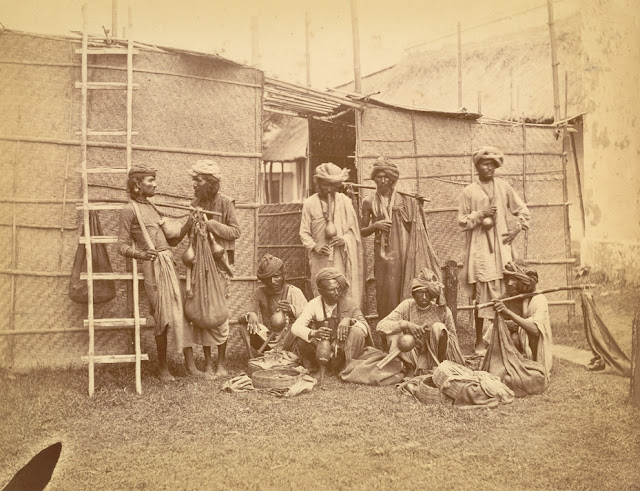
Bengali snake charmers used a number of species of snake including the most popular 'Jait' or cobra. Upon capture, venemous snakes would have their fangs removed, with the poison bag carefully preserved. This would reach high prices in local markets where Hindu physicians would purchase venom for use in the treatment of disease. Snake charmers would feed their snakes on fish, frogs and mice. Their charges would rarely live for more than six months in captivity. The snakes were used during the Manasa Devi festival, held in July or August, when priests would make them crawl in front of the idol during ceremonies.Source: British Library
Group of Men probably from Agricultural Castes - Eastern Bengal 1860's
Source: British Library
Portrait of a Man Benloging to Kayasth Caste (Hindu Writer Caste) - Eastern Bengal 1860's
Source: British Library
A Muslim Scholar posed with a Book - Eastern Bengal 1860's
Source: British Library
Portrait of a Goala or Member of the Muslim Cowherding Class - Eastern Bengal 1860's
Source: British Library
Portrait of a Kulin Brahman (High Caste Priest) - Eastern Bengal 1860's
The Kulin Brahmans were a branch of the Hindu priestly class in Bengal whose social organisation included a well-established system of polygamy, where one man could take as many wives as he wished. The contemporary records of James Wise in his 'Notes on the Races of Eastern Bengal' records that the marriage of a daughter into a reputable Kulin family meant a raise in social standing and public esteem for her family. A noted colony of Kulin Brahmans was based at Lakshmipasa, in the Jessore District of Bangladesh.Source: British Library
Portrait of a reputed hermaphrodite (Hijra) and companions - Eastern Bengal 1860's
Hermaphrodites, also known today in South Asia as 'hijra', are often followers of the Hindu goddess Bahuchara Mata.Source: British Library
Portraits of Two Men Belonging to the Chandal or Namasudra Caste (Ghasi sub-caste) - Eastern Bengal 1860's
Source: British Library


May 20, 2012

Madhuri Dixit At Madame Tussauds Museum

Wednesday, May 9, 2012

May 09, 2012

Photograph of the Dashashwamedh Ghat from the Kitchener of Khartoum Collection: 'Views of Benares.

Photograph of the Dashashwamedh Ghat from the Kitchener of Khartoum Collection: 'Views of Benares. Presented by the Maharaja of Benares' by Babu Jageswar Prasad in 1883. Dashashwamedh Ghat, on the River Ganges at Varanasi, is one of the busiest of the cities many ghats, where residents and pilgrims perform their ablutions, Brahmin priests sit on wooden platforms under bamboo umbrellas to offer prayers for their clients, masseurs ply their trade and boatmen jostle for custom. The name of the Ghat is derived from the legend that this was the site where Lord Brahma performed the "Das ashvamedha" (10 horse) sacrifice for King Divodasa. This ghat is regarded as one of the world's most celebrated tirthas, or crossing places where the devotee can gain access to the divine and gods and goddesses can come down to earth.

Tuesday, May 8, 2012

May 08, 2012

BRASSO MAGIC 2012

World Bank President Advocates for Lower Tariffs to Boost Global Trade

  World Bank Group President Ajay Banga speaks during the IMF/World Bank Spring Meetings in Washington Introduction In a recent address du...